

The Land Rover LT230 Transfer Box

Complete Guide to Ratios, Variations, Maintenance and Common Issues
When working with a classic Land Rover Defender, one component that appears in nearly every discussion about drivetrain health and capability is the LT230 transfer box. Just as we explored the TD5 and TDCi engines in previous Landroid Motors articles, the LT230 deserves a detailed look of its own.
It is a core part of the Defender’s four wheel drive system and a major reason these vehicles are so capable in demanding conditions, whether towing, working off road or covering high mileages year after year.
What Is the LT230 Transfer Box?
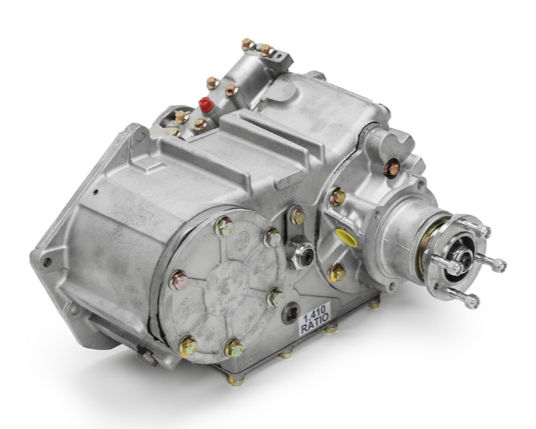
The LT230 is a transfer box used in a wide range of Land Rover models from the early 1980s onwards, including the Ninety, One Ten, Defender, Range Rover Classic and Discovery.
It sits directly behind the main gearbox and is responsible for splitting drive between the front and rear axles. Inside the casing is a centre differential which allows the front and rear wheels to rotate at slightly different speeds when driving on the road. This prevents transmission wind up and allows smooth cornering.
In simple terms, the LT230 performs three key jobs:
• It provides permanent four wheel drive
• It allows selection between high and low range gearing
• It allows the centre differential to be locked for off road use
The LT230 has earned a reputation as one of the strongest and most dependable transfer boxes Land Rover has ever produced. For Defender owners who regularly tow, green lane or work their vehicles hard, it is a major contributor to long term reliability.
How the LT230 Works in Everyday Driving
During normal road use, the centre differential inside the LT230 allows the front and rear axles to turn at different speeds. This is important when cornering, as the front wheels travel a slightly longer distance than the rear wheels.
When driving off road or on slippery surfaces, this same differential can become a weakness if one axle loses traction. To overcome this, the LT230 allows the centre differential to be mechanically locked. When diff lock is engaged, drive is split evenly between the front and rear axles, ensuring that loss of traction at one end does not stop the vehicle moving.
The LT230 also features a selectable low range. Low range does not increase engine power, but it multiplies torque through lower gearing. This allows the vehicle to move slowly with greater control when climbing steep hills, descending rough ground or manoeuvring heavy trailers.
Key Technical Features
Permanent Four Wheel Drive
Most Defender applications of the LT230 use permanent four wheel drive. This provides predictable handling and improved traction compared to part time systems.
Centre Differential Lock
The diff lock is manually engaged using a lever. When locked, the front and rear propshafts rotate together, providing maximum traction. Diff lock should always be engaged before tackling slippery or uneven terrain to protect the centre differential from shock loading.
High and Low Range Gearing
The LT230 has two selectable ranges:
Range | Typical Use |
High Range | Normal road driving and light off road use |
Low Range | Off road driving, towing, hill climbs and slow manoeuvring |
All LT230 units share a similar low range ratio of approximately 3.32 to 1. Differences between units relate almost entirely to the high range ratio.
LT230 Variants and Suffixes
Over its production life, the LT230 evolved through several variants. While the basic design remained the same, later units benefited from improved bearings and gear profiles.
Variant | Description |
LT230T | Early and mid production units fitted to Ninety, One Ten and early Defenders |
LT230Q | Later units with revised gears for quieter operation |
LT230SE | Discovery 2 units with revised internals and electronic interfaces |

Power Take Off (PTO) and Auxiliary Options on the LT230
While most Defender owners will never fit or use it, the LT230 transfer box was designed with a Power Take Off (PTO) provision built into the rear of the casing. The PTO is an optional feature that allows the transfer box to drive auxiliary equipment such as hydraulic pumps, winches or other driven accessories from the drivetrain.
What Is the PTO?
The PTO on the LT230 is a mechanical output at the rear of the transfer box, located behind a removable cover plate. Internally, this output is driven off the input gear at the top of the transfer box via dog teeth behind the gear, providing a positive drive source that rotates with the gearbox output gear. This means the PTO can deliver driven power whenever the transmission is engaged and turning. The PTO had provision for both mechanical (cable) and pneumatic engagement systems depending on the particular application and accessories fitted.
Typical LT230 PTO Uses
Although not common on standard Defenders, PTO options were provided or can be retrofitted for a range of applications:
Hydraulic Pumps
A common use for the PTO is to power a hydraulic pump. Specialist kits are available that include the PTO unit, engagement cable or lever and a gear pump. Such setups are used to drive hydraulic systems for mounted cranes, tipping trailers, hydraulic jacks or other PTO‑driven equipment. These kits are sized to deliver useful flow and pressure when the engine is at cruising speed.
Mechanical Winches
Rear‑mounted mechanical winches can be driven from the PTO output flange. This uses the transfer box as the drive source rather than an engine front‑mounted winch. Adaptors and flanges are available that match the PTO output to standard propshaft flanges, making it mechanically straightforward to mount driven ancillary devices.
Accessory Drive
In bespoke builds and expedition vehicles the PTO can be used to drive water pumps, air compressors or generator units. Since the PTO is driven by the gearbox output, engine speed and gear selection directly affect PTO speed, which is useful when variable driven speeds are desired.
Engagement Options
PTO engagement can be mechanical (via a lever and cable) or pneumatic, depending on the model and installed accessory. Mechanical PTO units typically require a control lever and linkage to engage or disengage the output, while pneumatic types use an air‑activated mechanism. Both systems fit into the same rear mounting aperture on the LT230.
Overdrive and Other Auxiliary Gearbox Add‑Ons
Although not fitted from the factory, some LT230 users choose to add overdrive or underdrive units to further tailor transfer case ratios for specific uses.
Overdrive Units
Some aftermarket overdrive systems were developed to reduce engine revs at cruising speeds by effectively multiplying the transfer case high range ratio with an additional set of gears. These overdrive gearsets replace the standard input gear with a different set that changes the internal gear ratio, providing a lower overall drive ratio for improved fuel economy and reduced noise at road speeds. These solutions are specialist and not OEM fitments, but they illustrate the flexibility of the LT230 architecture.
Crawler and Underdrive Boxes
Similarly, “crawler” or underdrive kits extend the low range beyond the standard LT230 low ratio. These units can multiply the low range ratio to dramatic effect, giving extremely low crawl speeds for technical off road driving while leaving normal high range unchanged. These are specialist aftermarket options that mount into the transfer case and allow dedicated off road vehicles to combine normal road drive-ability with very low gearing.
LT230 High Range Ratios Explained
The high range ratio determines engine speed at cruising speeds and how the vehicle feels on the road. A higher numerical ratio gives lower gearing, which improves towing and off road control but increases engine revs. A lower numerical ratio reduces engine speed at motorway speeds but slightly reduces low speed pulling power.
Common high range ratios include:
High Range Ratio | Characteristics |
|---|---|
1.003 | Near direct drive, high torque applications |
1.667 | Very low geared, strong towing and off road control |
1.410 | Traditional Defender ratio |
1.222 | Balanced road and off road use |
1.211 | Later Discovery and TDCi Defender ratio |
LT230 Prefix Codes and Full Ratio Table
Each LT230 is stamped with a prefix code that identifies the internal gearset and original application. This is the most reliable way to identify which ratio a transfer box uses.
High Range Ratio | Vehicle Application | |
12D | 1.667 | Early 110, 2.25 and 2.5 N/A |
13D | 1.410 | 2.5 N/A and early Defender |
14D | 1.003 | Range Rover Classic automatic |
15D | 1.192 | Early RRC manual |
20D | 1.667 | Early utility models |
21D | 1.667 | Low power petrol variants |
22D | 1.410 | 200 and 300 Tdi Defender |
25D | 1.410 | V8 110 |
26D | 1.003 | RRC petrol automatic |
27D | 1.192 | V8 90 |
28D | 1.222 | RRC and early Discovery |
29D | 1.192 | V8 90 |
32D | 1.222 | RRC US specification |
34A | 1.410 | Discovery I MPI |
36D | 1.211 | Late Discovery I |
37D | 1.211 | Late Discovery I export |
38D | 1.211 | 50th Anniversary 90 |
40D | 1.211 | NAS 90 |
41D | 1.211 | Early Discovery 2 with diff lock |
43D | 1.410 | TD5 Defender |
47D | 1.667 | Early petrol models |
57D | 1.410 | TD5 Defender |
59D | 1.211 | V8 export |
61D | 1.211 | Discovery 2 without diff lock |
62D | 1.211 | Discovery 2 without diff lock |
68D | 1.211 | Discovery 2 with diff lock |
69D | 1.211 | Discovery 2 without diff lock |
70D | 1.211 | Discovery 2 without diff lock |
80D | 1.211 | Defender TDCi |
81D | 1.211 | Defender TDCi |
Why the LT230 Suits the Defender
The LT230 complements the Defender perfectly.
Durability - Designed to handle high torque and sustained use.
Parts Availability - Excellent long term availability of parts and rebuild components.
Flexibility - High range ratios can be changed to suit road use, towing or off road driving.

Common LT230 Problems
Worn Output Seals and Bearings
Oil leaks around the propshaft flanges usually indicate wear. Left untreated, this can lead to oil loss and internal damage.
Centre Differential Wear
Allowing excessive wheel spin with diff lock disengaged can overload the centre differential gears.
Diff Lock Engagement Issues
Stiff or inoperative diff lock is usually caused by seized or worn linkages.
Water Contamination
Milky or grey oil indicates water ingress and requires immediate oil replacement.
Oil Specification and Capacity
Correct lubrication is critical to LT230 longevity.
• Oil type: 75W-90 or 80W-90 EP gear oil
• Specification: API GL4 or GL5
• Capacity: approximately 2.3 litres
Always fill to the level plug with the vehicle on level ground.
Maintenance Tips for Defender Owners
• Change transfer box oil regularly
• Inspect the magnetic drain plug for debris
• Keep the breather clear
• Operate diff lock periodically
• Engage diff lock before loss of traction occurs
Upgrades and Modifications
Ratio Changes
Swapping high range gearsets allows gearing to be tailored to motorway or off road use.
Rebuilds
Replacing bearings, seals and flanges can significantly improve smoothness and noise levels.
Aftermarket Support
Strong specialist support exists for strengthened components and complete rebuilt units.
FAQ: Common Questions About the LT230 transfer box
What oil should I use in my Defender transfer box?
Use 75W-90 or 80W-90 EP gear oil meeting API GL4 or GL5 specification.
How much oil does the LT230 hold?
Approximately 2.3 litres.
Can I change my LT230 ratio?
Yes. High range gearsets can be swapped to alter cruising speed and drivability.
How do I identify my LT230 ratio?
Check the prefix code stamped on the transfer box casing and match it to the table above.
Should I use diff lock regularly?
Yes. Regular use keeps the mechanism free and ensures reliable engagement.
Related Defender Technical Guides
To understand how the LT230 works as part of the wider drivetrain, see our related guides on the TD5 and Puma TDCi engines and Defender servicing.
Summary
The LT230 transfer box is a vital component of the classic Land Rover Defender, delivering strength, reliability, and off-road capability. With its versatile high and low range gearing and optional diff lock, the LT230 ensures your Defender handles towing, rough terrain, and daily driving with ease.
Understanding LT230 ratios, maintenance tips, and upgrade options helps Defender owners keep their vehicles performing at their best. For expert guidance, and servicing for LT230 transfer boxes and other Defender components, visit Landroid Motors.


Comments