

Land Rover Defender Puma TDCI Engine: Complete Guide to Specs, Issues & Upgrades

Updated: Aug 10
When Land Rover introduced the TDCI “Puma” engine to the Defender in 2007, it marked one of the most significant updates in the model’s long history. Available in 2.4-litre and later 2.2-litre variants, this engine brought modern common-rail diesel technology and a six-speed gearbox to a vehicle that had previously retained a very traditional design.
For many enthusiasts, this change was controversial—the engine was sourced from Ford’s Duratorq family rather than being an in-house Land Rover design. Some die-hard fans feared the Defender might lose its rugged identity. However, the TDCI quickly proved itself as a major step forward in refinement, usability, and efficiency without sacrificing the Defender’s legendary capability.
At Landroid Motors, we’ve worked extensively with these engines. In this guide, we’ll explore their strengths, weaknesses, common issues, and how they stack up against previous Defender engines.

Why the Puma Engine Was a Game-Changer
The TDCI engine – internally known by Ford as the Duratorq ZSD – transformed the driving experience of the Defender in three major ways:
Refinement and Comfort
Gone were the days of agricultural diesel clatter. The TDCI’s common-rail fuel injection brought quieter, smoother power delivery. Paired with the MT82 six-speed manual gearbox, motorway journeys became much more civilised.The overdrive sixth gear cut engine RPM at cruising speeds, reducing cabin noise, vibration, and driver fatigue.
Improved Torque for Towing and Off-Roading
With 360 Nm (265 lb-ft) of torque at just 2,000 RPM, the Puma engine offered strong low-end grunt – ideal for towing and technical off-road driving. The power delivery is linear, giving excellent traction control on challenging terrain.
Better Fuel Efficiency
For a vehicle with the Defender’s boxy aerodynamics, the TDCI achieved respectable fuel economy thanks to its sophisticated engine management system and six-speed transmission. Long-distance drivers benefited most, particularly at motorway speeds.
Technical Specifications at a Glance
Feature | 2.4 TDCI | 2.2 TDCI |
|---|---|---|
Production Years | 2007–2011 | 2012–2016 |
Power Output | 122 hp @ 3,500 rpm | 122 hp @ 3,500 rpm |
Torque | 360 Nm @ 2,000 rpm | 360 Nm @ 2,000 rpm |
Gearbox | MT82 6-speed manual | MT82 6-speed manual |
Emissions Standard | Euro 4 | Euro 5 (with DPF) |
The Downsides: Known Issues and Trade-Offs
While the TDCI modernised the Defender, it also introduced new complexities and potential failure points.
1. Sump Oil Pick-Up (2.4 Only)
A known weak point in the early 2.4 engines is the push-fit sump oil pick-up pipe. There was a Land Rover recall for affected vehicles and most should have had the appropriate fix by now.
2. Fuel Injector Failures
The common-rail system uses high-pressure injectors, which are precision components but prone to wear over time. Typical lifespan is around 80,000–100,000 miles, but poor fuel quality or contamination can shorten this significantly.
Symptoms of failure:
Rough idle
Black smoke
Loss of power
Poor starting, hot or cold
Increased fuel consumption
Consequences if ignored: A failed injector can cause over-fueling, leading to holed, cracked, or melted pistons – an expensive repair.
Tip: Use high-quality fuel, replace filters on schedule.
3. Increased Complexity
Compared to older Defender engines, the TDCI’s common-rail system, advanced ECU, and emissions equipment make diagnosis and repair more complex.The 2.2-litre version adds a Diesel Particulate Filter (DPF), which can block if the vehicle is used mainly for short trips.
4. Clutch & Flywheel Characteristics
Unlike some vehicles using the same engine, the Defender does not have a dual-mass flywheel (DMF). Instead, Land Rover opted for a single-mass flywheel for durability.The trade-off? A noticeable gear rattle at idle in neutral. This is normal and not a fault.
Additional Weak Point: Gearbox Output Shaft Wear
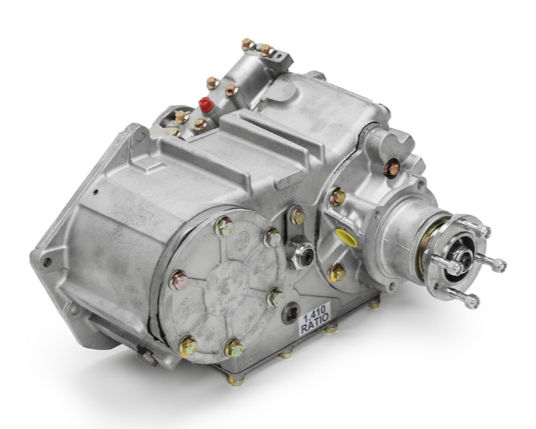
A well-documented issue with the MT82 six-speed gearbox fitted to TDCI Defenders is output shaft spline wear. Over time, the splines connecting the gearbox to the transfer box can wear down due to inadequate lubrication. If left unchecked, this results in a loss of drive.
💡 Defender Puma Giving You Trouble?
Skip the trial-and-error DIY fixes. Get your Defender diagnosed by Exeter's independent Land Rover specialists. Book an expert diagnostic check at Landroid Motors →

Common Oil and Service Specs
Using the correct oil and following proper service intervals is critical for the Puma engine’s longevity.
Engine oil: Fully synthetic 5W-30 meeting
Ford spec: WSS-M2C913-C or WSS-M2C913-D
JLR spec: STJLR.03.5003
Capacity: ~7 litres
Change interval: Every 12,000 miles or 12 months (whichever comes first)
Timing system: Chain-driven (no belt) – no scheduled replacement, but tensioners and guides will require renewing at high mileage
Puma vs Td5 vs Tdi: How Does It Compare?
Feature | TDCI (Puma) | Td5 | 300Tdi |
|---|---|---|---|
Years Produced | 2007–2016 | 1998–2006 | 1994–1998 |
Displacement | 2.4 / 2.2 litres | 2.5 litres | 2.5 litres |
Power | 122 hp | 122 hp | 111 hp |
Torque | 360 Nm | 300 Nm | 265 Nm |
Emissions Compliance | Euro 4 / Euro 5 | Euro 3 | Euro 2 |
Refinement | High | Medium | Low |
FAQ: Common Questions About the TDCI Engine
Is the Puma engine reliable?
Yes – provided it is well maintained. Most failures occur due to neglect or poor-quality fuel. Preventative measures (oil pick-up fix, injector testing) go a long way.
What’s the biggest weakness?
For the 2.4, the oil pick-up pipe is a known risk but, not many left now that have not been updated. For both engines, injector failure can be costly if ignored.
Is the gearbox reliable?
The MT82 is generally strong but prone to output shaft spline wear if not maintained.
Does the engine have a timing belt?
No. Both the 2.4 and 2.2 TDCI engines use a timing chain, which is generally designed for the life of the engine. Unlike older engines, there is no scheduled replacement interval. However, tensioners and guides can wear at high mileage, so listen for chain rattle.
Can I remap the Puma engine?
Yes. A quality remap can improve drivability and torque. However, avoid cheap solutions as they can stress components and emissions systems.
What oil should I use?
Use a fully synthetic 5W-30 oil meeting Ford WSS-M2C913-C/D and JLR STJLR.03.5003 specifications.

Closing the Bonnet: What Makes the TDCI Special
The Land Rover Defender TDCI “Puma” engine was a turning point for the iconic 4x4. It brought refinement, comfort, and motorway usability without abandoning its rugged DNA. Yes, it introduced complexity and some weaknesses, but when maintained correctly, the Puma engine is robust, capable, and a true modern classic.
If you own a TDCI Defender, understanding its quirks and servicing needs is the key to reliability. And if you need help, we’re here.
✅ Need Expert Help with Your Defender TDCI?
🔧 Experiencing Puma TDCi Issues or Planning an Upgrade?
From erratic idling and EGR faults to drivetrain clunks and performance remaps, diagnosing a Defender 2.4 or 2.2 TDCi requires specialist diagnostic equipment and hands-on experience.
Don't spend time guessing or throwing parts at the problem. Whether you need an expert health check, routine servicing, or custom performance upgrades, our team at Landroid Motors is here to keep your Defender running at its best.
Or call our Exeter workshop directly on 01392 305452 to speak with a team member.


Comments