

Land Rover Series III vs. Early Land Rover 90/110: Which is the Better Entry Classic?

Updated: Jan 21
For the aspiring classic Land Rover owner standing on the forecourt, looking at a Series III next to an early Land Rover 90, the differences might seem cosmetic. They share the same boxy DNA, the flat glass, and that unmistakable utilitarian charm.
However, beneath the aluminium skin, they are separated by a massive technological leap. One is the final, polished iteration of a post-war agricultural tool; the other is the blueprint for the modern off-roader.
If you are debating between the Leaf-Sprung Legend (Series III) and the Coil-Sprung Evolution (Early 90/110), you need to understand the nuts and bolts. As anyone who has driven them back-to-back will tell you, they offer two very different ownership experiences.
Here is our technical deep dive to help you decide which one belongs in your driveway.
The Timeline: When did the "Defender" actually arrive?
One of the most common misconceptions in the classic 4x4 world is that all coil-sprung Land Rovers are "Defenders." This isn't technically true, and knowing the difference marks you as a true enthusiast.
1971–1985: The Series III
The final iteration of the "Series" Land Rovers. While it looked similar to the late Series IIA, the Series III brought a modernized interior with a plastic dashboard and instrument cluster moved to the driver's side.
1983: The Land Rover One Ten (110)
Land Rover launched the long wheelbase coil-sprung model first. It was simply sold as the "Land Rover One Ten."
> Fun Fact: The very earliest 1983 models still retained the sliding side windows from the Series III before switching to wind-up windows in 1984.
1984: The Land Rover Ninety (90)
The short wheelbase version followed a year later, replacing the Series III 88". Sold as the "Land Rover Ninety."
1990: The "Defender" Nameplate is Born
With the launch of the Land Rover Discovery in 1989, simply calling the utility vehicle "Land Rover" became confusing. In late 1990, the utility range was officially rebranded as the Defender (90, 110, and 130), coinciding with the introduction of the celebrated 200Tdi engine.
Key Takeaway: If you buy a 1986 model, you technically own a "Land Rover Ninety," not a Defender, though the parts are 95% interchangeable.


Suspension: Leaf Springs vs. Coil Springs
The single biggest technical difference, and the one that will define your driving experience, is the suspension setup.
Series III (Leaf Springs)
The Tech: Multi-leaf steel springs clamped to the axle.
The Experience: Stiff and bouncy when unladen. The suspension travel is limited, meaning wheels lift off the ground easily on uneven terrain (known as "cross-axling").
Handling: Predictable but heavy. You feel every pothole, but the stiffness makes it feel planted and robust when carrying heavy loads.
Early 90/110 (Coil Springs)
The Tech: Coil springs with telescopic dampers and a Panhard rod (front) / A-frame (rear) to locate the axles, technology borrowed from the Range Rover Classic.
The Experience: A revelation. While still a truck, it has vastly better axle articulation off-road and a much more compliant ride on tarmac. It doesn’t "crash" over bumps like a Series.
Handling: Softer. It can feel a bit "boaty" in corners if the bushes and shocks are worn, but it is far less fatiguing on long drives.
Drivetrain: Selectable vs. Permanent 4WD
This is the biggest operational difference between the two vehicles when driving on UK roads.
Series III: The Selectable System
The Series III uses a mechanical, part-time 4WD system. In standard mode, you are in Rear-Wheel Drive (RWD). To go off-road, you use the famous "Yellow Knob" to engage 4WD.
> Crucial Note: You must drive in 2WD on tarmac to avoid "wind-up" in the transmission, which can snap half-shafts.
Early 90/110: The LT230 Revolution
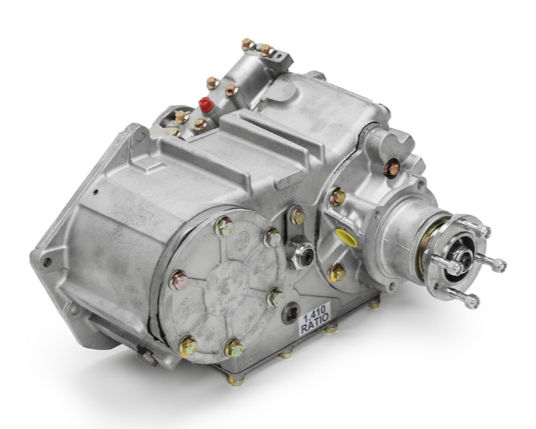
The 90/110 introduced the LT230 Transfer Box, a gear-driven unit still considered one of the best transfer cases ever made. It provides Permanent 4WD with a center differential. This allows the front and rear axles to rotate at different speeds for cornering on tarmac, making for safer handling in wet weather.
Engine Evolution: The Quest for Power
Knowing which engine is under the bonnet is critical for valuation and usability. Here is a quick comparison of the engines found in the Series III vs Early Defender:
Vehicle | Engine | HP | Characteristics |
Series III | 2.25L Petrol/Diesel | ~60-70 | Reliable but leisurely. 50-55mph cruise. |
Early 110 | 3.5L V8 Petrol | 114 | Thirsty but lovely. The only way to get real speed in an early 110. |
90 / 110 | 2.5L NA Diesel (12J) | 67 | Bombproof reliability, though still best suited for B-roads. |
90 / 110 | 2.5L Turbo Diesel (19J) | 85 | The Period Option. The first factory Turbo diesel. |
Defender | 200Tdi | 107 | The Game Changer. Direct injection, intercooled. Capable of 70mph+ and 30mpg. |
Landroid’s Insight: Living with the "19J" Turbo Diesel
The 2.5L Turbo Diesel (Engine Code 19J) often gets a mixed reputation, but for many collectors, it is the authentic heart of an 80s Land Rover. While it isn't as "abuse-tolerant" as the later Tdi engines, it can be a faithful runner.
How to keep a 19J engine happy:
Warm up and Cool down: Let the engine idle for 30-60 seconds before switching off to let the turbo spin down.
Regular Oil Changes: We recommend changing the oil and filter every 3,000–4,000 miles. Clean oil is the lifeblood of that early turbocharger.
Sympathetic Driving: It wasn't designed for hours of 70mph motorway hammering. Drive it at 60mph, and it will likely return the favour.

Interiors & Comfort Features
Windows:
Series III: Sliding side windows. Great for elbow room (you can lean out!), but not great for water sealing.
90/110: Introduced winding windows (crank handle) in 1984. The doors were thicker, reducing elbow room but significantly improving sound deadening.
Steering:
Series III: Recirculating ball, non-assisted. Heavy at low speeds, parallel parking is a workout.
90/110: Power steering became an option on early models and standard later. It makes the truck infinitely more drivable in town.
Gearbox:
Series III: LT76 4-speed. Unlike earlier Series models, the Series III has synchromesh on all forward gears.
90/110: LT77 5-speed. Identifiable by the "dog-leg" reverse (up and to the left). The 5th gear is a massive upgrade for motorway cruising.
The Verdict: Which one is for you?
Choose the Series III if:
You want the purest vintage experience. It forces you to drive differently, reading the road ahead to maintain momentum and accepting that 50mph is fast enough.
Best for: Weekend tinkerers, purists, and sunny Sunday drives to the pub.
The Vibe: All Creatures Great and Small.
Choose the Early 90/110 if:
You want the classic aesthetic but with a suspension system that allows you to use the truck more frequently. It is safer, more capable in modern traffic, and far more comfortable.
Best for: People who want to green lane, tow, or commute occasionally.
The Vibe: Camel Trophy adventurer.
Still unsure?
At Landroid Motors, we specialize in both. Whether you want a concourse-condition Series III restoration or a Defender 90 restomod with a modern crate engine, we can guide you toward the right chassis for your lifestyle.
Contact us today to discuss your dream build


Comments